Draw a Circle in C++ Using Graphics.h
Introduction to C++ graphics
Graphics in C++ is defined to create a graphic model like creating different shapes and adding colors to it. It tin be done in the C++ console by importing graphics.h library to GCC compiler. We tin draw the circle, line, eclipse, and other geometric shapes besides. The application of Object-oriented Programming is a principal technique to be used here. C++ does non accept any built-in functions to perform drawing as they accept low-level programs to utilise; instead, we tin apply API to practise graphics.
Syntax
The formal syntax is given equally:
# include<graphics.h>
                {
                Initgraph();
                }
Few Graphics attributes are:
setcolor(color), setbkcolor(color), setlinestyle(fashion, blueprint,thickness).
How do graphics piece of work in C++?
The graphics are a two-dimensional concept; to implement this, we need implementation and few functions in C++ programming. So, a window or canvas is the main feature to bear witness the output. Since we need a good framework to develop a skilful feature to depict, here in this article, I have used DevC++ IDE for that nosotros need a certain package in addition to work with Graphics, to download this, we can refer WinBGIm to install the graphics library.
To work with DevC++, we demand to download graphics.h and libbgi. a file. The next step is to go to the project and select project options followed by the parameter tab and paste the following in a linker tab: lbgi -lgdi32 -lcomdlg32 -luuid -loleaut32 -lole32.
Many GUI programming is stopped in C++ because they don't have the default graphics library.
To work with graphics, nosotros need a few essentials before inbound the code.
1. Co-ordinates: This specifies how points are placed in a window; the initial origin of the screening signal is assumed as (0,0). This co-ordinated arrangement depicts how and where to perform a draw choice is specified. The Graphics screen has 640 X 480 pixels.
2. Basics of Colour: The default color elements are red, green, and blue; the output of all these colors confines to the pixels of the screen. To set a colour, we tin apply setcolor (number); The number specifies the color code; for example, a number 14 is given for yellow. Shading and coloring add extra furnishings to the image.
Few functions brand the code more attractive, which works well in graphics manner.
- Glimmer: Information technology helps to glimmer a character on the screen window.
- GOTOXY: It helps to move a cursor to whatsoever position on the screen.
- Delay: Information technology suspends a few sections. For example, to motion the next car. It waits for a while.
- Position functions like getmaxx(), getx() and gety().
Ok, let's go with the working steps in graphics code.
- The offset footstep is to include a header file GRAPHICS.H with a graphic function, and graphic.lib has built-in library functions.
- Next is to include a function initgraph () which starts the graphic mode and comes with two variables gd, a graphic driver and gm, graphic mode. followed by this, we tin employ a directory path.
- Closegraph () – This function shifts the screen back to text mode. To end the program, this function is used; it flushes the memory used before for the graphics.
- clear() – It returns the cursor position to (0,0).
- circumvolve () – Creates a circle with a given radius.
- line () – Creates a line with starting and ending points.
For example, to draw a uncomplicated line or a circumvolve, the following parameters are added.
- lineto(x,y): it moves from the current position to the user-divers position.
- circle (x, y, radius): To depict a whole circle, we need a eye radius.
- rectangle (x1, y1, x2, y2): where x1, y1 is the upper left side and the lower correct is x2, y2.
Examples of C++ graphics
Here I have given a sample plan on how to work on the graphics mode and development process in devC++.
Case #one
To draw a triangle in C++ using graphics
Code:
#include <graphics.h>
                #include <iostream>
                int main()
                {
                int gd = Notice, gm;
                initgraph(&gd, &gm, "");
                line(140, 140, 350, 100);
                line(140, 140, 200, 200);
                line(350, 140, 200, 200);
                getch();
                closegraph();
                }
Explanation
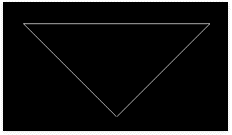
The in a higher place simple Code draws a line of x1, y1, x2, y2 points on a screen. Gd, gm is a graph mode for a part initgraph. The generated graphics window of the above code is shown equally:
Output:
Example #2
Creating a Domicile Page with Rectangle shapes and text
Code:
#include<iostream.h>
                #include<conio.h>
                #include<graphic.h>
                #include<math.h>
                void main()
                {clrscr();
                int g=0,a;
                initgraph(&m,&d,"");
                setbkcolor(14);
                setcolor(six);
                settextstyle(2,0,4);
                outtextxy(180,130,"G");
                setcolor(5);
                settextstyle(2,0,4);
                outtextxy(120,120,"O");
                setcolor(6);
                settextstyle(2,0,four);
                outtextxy(300,120,"O");
                setcolor(5);
                settextstyle(two,0,4);
                outtextxy(250,130,"G");
                setcolor(ii);
                settextstyle(ii,0,4);
                outtextxy(360,160,"L");
                setcolor(3);
                settextstyle(2,0,4);
                outtextxy(310,130,"E");
                setcolor(ix);
                settextstyle(ii,0,4);
                setcolor(8);
                settextstyle(2,0,4);
                outtextxy(110,250,"surf");
                settextstyle(two,0,4);
                outtextxy(350,320,"Get AHEAD");
                setcolor(6);
                rectangle(130,210,450,210);
                rectangle(90,310,170,340);
                rectangle(360,320,510,320);
                getch();
                }
Explanation
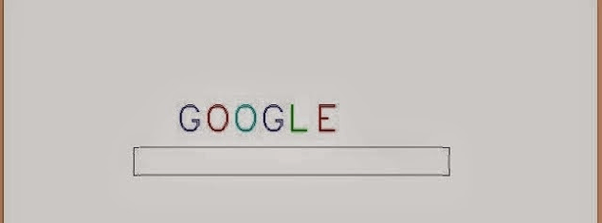
The above code draws a rectangle shape along with text in a dissimilar color.
Output:
Example #3
Code:
#include<stdio.h>
                #include<conio.h>
                #include<graphics.h>
                #include<dos.h>
                void flood(int,int,int,int);
                void main()
                {
                int gd,gm=Discover;
                clrscr();
                detectgraph(&gd,&gm);
                initgraph(&gd,&gm,"C:\\TurboC3\\BGI");
                rectangle(60,60,90,ninety);
                flood (50,fifty,8,0);
                getch();
                }
                void flood(int a,int b, int fcol, int col)
                {
                if(getpixel(a,b)==col)
                {
                filibuster(xv);
                putpixel(a,b,fcol);
                flood(a+1,b,fcol,col);
                flood (a-i,b,fcol,col);
                inundation (a,b+1,fcol,col);
                flood (a,b-1,fcol,col);
                }
                }
Explanation
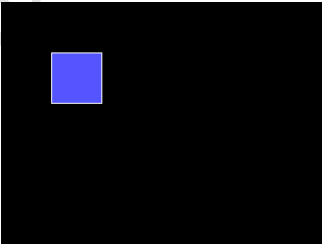
The above code flooded a shape with the text color.
Output:
Example #4
Code:
#include <conio.h>
                #include <graphics.h>
                #include <iostream>
                #include <math.h>
                #include <stdio.h>
                #include <stdlib.h>
                using namespace std;
                void ellipsedr(int e1, int e2, int a1, int b1,
                bladder alp, int color)
                {
                float tt = iii.14 / 180;
                alp= 360 - alp;
                setcolor(color);
                int tetaa;
                for (int j = 0; j < 360; j += 1) {
                tetaa = j;
                int x1 = a1 * cos(t1 * tetaa) * cos(t1 * al)
                + b1 * sin(t1 * tetaa) * sin(tt * alp);
                int y1 = b1 * sin(t1 * tetaa) * cos(tt * alp)
                - a * cos(tt * tetaa) * sin(tt * alp);
                putpixel(e1 + x1, e2 - y1, color);
                }
                }
                void view(int e1, int e2, int rr, int a1, int b1,
                int alp, float pp, int colour)
                {
                setcolor(color);
                float tt = 3.xiv / 180;
                float ta, tb, d;
                float angle = (pp * alp);
                ta = cos(t * fmod(bending, 360));
                tb = sin(t * fmod(angle, 360));
                ta*= ta;
                tb *= tb;
                ta = ta / (a1 * a1);
                tb = tb / (b1 * b1);
                d = sqrt(ta + tb);
                d = one / d;
                int gox = e1 + (rr + d) * cos(tt * alp);
                int goy = e2 - (rr + d) * sin(tt * alp);
                int goang = angle + alp;
                ellipsedr(gox, goy, a,
                b, draw_ang, color);
                }
                void elipsecirc(int ninety, int yc,
                int rr, int a1, int b1)
                {
                float tetaa = 0;
                double hei, pi1;
                hei = (a1 * a1) + (b1 * b1);
                hei /= ii;
                pi1 = sqrt(hei);
                pi1 /= rr;
                pi1 = 1 / (pi1);
                for (;; tetaa -= 1) {
                view(e1, e2, rr, a1, b1,tetaa, pi1, WHITE);
                circle(xcir, ycir, rr);
                delay(25);
                view(e1, e2, rr, a1, b1,tetaa, pi1, Black);
                }
                }
                int primary()
                {
                int gd = DETECT, gm;
                initgraph(&gd, &gm, "");
                int mx = getmaxx();
                int my = getmaxy();
                elipsecirc(mx / ii, my / 2,
                90, xxx, 26);
                closegraph();
                return 0;
                }
Explanation
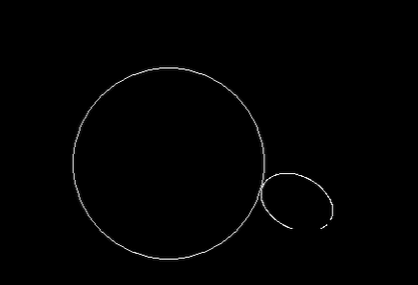
The above code displays an ellipse over the circumvolve past setting x and y coordinates.
Output:
Conclusion
In this commodity, we take described how graphics work in C++ programming. We have presented simple and full general functions used in graphics to practise programming. We accept also discussed the design and case process to sympathise the concept.
Recommended Articles
This is a guide to C++ graphics. Hither we hash out how graphics work in C++ programming and Examples along with the codes and outputs. You can besides look at the following article to larn more –
- C++ accented value
- C++ thread( )
- C++ sort()
- C++ reserve()
Source: https://www.educba.com/c-plus-plus-graphics/
0 Response to "Draw a Circle in C++ Using Graphics.h"
Post a Comment